


Deprecated: Function get_the_author_ID is deprecated since version 2.8.0! Use get_the_author_meta('ID') instead. in /var/www/dev-sites/dev35.leowebmarketing.pro/public_html/wp-includes/functions.php on line 6170

By Verdant
• Federal tax credits: Set to expire December 31, 2025, due to new legislation (“One Big Beautiful Bill”—OBBB). Homeowners must act now to claim solar, battery, and efficiency upgrade credits before they disappear. Projects must be installed and operational by December 31, 2025, to claim federal credits.
• SGIP battery incentives: New funding available, especially for income-qualified, medically vulnerable, and fire-zone households.
• HEEHRA: As of September 2025, all single-family rebates are fully reserved statewide; no new applications accepted. Multifamily rebates still open via certified contractors.
• Deadlines matter: Most programs require using approved contractors and fill up fast.
• Urgency: This is your last chance for many big-ticket incentives—do not wait until December!
Quick Answer
Are federal and state rebates for clean energy still available in California?
Federal tax credits for clean energy upgrades are ending soon. The new One Big Beautiful Bill (OBBB) accelerates the phase-out: all major tax credits now expire December 31, 2025. Some state and utility rebates remain, but homeowners should move quickly before funds run out.
What’s New for 2025
- OBBB Passed: The One Big Beautiful Bill (OBBB), enacted July 2025, shortens the lifespan of clean energy tax credits originally set by the IRA.
- Federal credits expire: The Residential Clean Energy Credit and Home Improvement Credit now end December 31, 2025.
- HEEHRA paused/closed for most: After several pause/resume cycles, all single-family HEEHRA funds are now fully reserved as of June 2025. Multifamily incentives remain for eligible projects.
- SGIP: New $280 million Residential Solar & Storage Equity budget launched in June, with priority for vulnerable and fire-zone customers.
- HOMES: Launch for low-income households expected late 2025. Check status here.
1. Federal Tax Credits: Act Before They Expire
The biggest green home upgrade savings are vanishing at year-end. If you want a federal tax credit for solar, batteries, insulation, or heat pumps, you must complete your project and place equipment in service by December 31, 2025.
- Energy Efficient Home Improvement Credit:
- What it is: 30% tax credit (up to $3,200/year) for insulation, windows, heat pumps, and more.
- Deadline: All projects must be completed by December 31, 2025, to qualify.
- How to claim: File IRS Form 5695 (2025 version). For equipment placed in service in 2025, certain items (e.g., heat pumps, windows, doors) require you to include the manufacturer’s QMID (Qualified Manufacturer Identification Number—a code provided by the product maker) on your tax return.
- Residential Clean Energy Credit:
-
- What it is: 30% tax credit for solar, batteries, and other clean energy systems—ends Dec 31, 2025.
- How to claim: IRS Form 5695. Stacking: You can claim both credits in the same year if you do multiple projects.
-
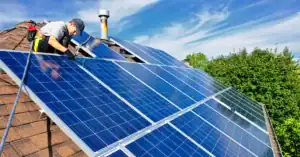
Real-World Example: If you install a $20,000 rooftop solar system with a battery in fall 2025, you can still save $6,000 on your 2025 taxes—but only if the system is placed in service and operational by December 31, 2025.
2. California State Rebates: Fall 2025 Status
State rebates are in flux. SGIP is currently your best shot at substantial savings, while HEEHRA for single-family homes is no longer open as of September 2025.
- HEEHRA:
- Status: All single-family rebates fully reserved; not accepting new applications as of September 2025. See latest status.
- Multifamily: Still open for qualified projects via TECH Clean California-certified contractors.
- History: After a brief pause in February 2025, the budget was exhausted by June.
- SGIP (Self-Generation Incentive Program):
- Status: Fresh funding available in the Residential Solar & Storage Equity budget. Prioritizes low-income, medically vulnerable, or fire-zone households.
- How to apply: Work with an SGIP-approved installer who can secure your rebate spot and help with documentation.
- HOMES:
- Status: Not yet open for most homeowners. Low-income pilot programs expected late 2025. Check for updates.
- Utility Electrification Rebates:
- Status: Some utility programs (e.g., $300 heat pump bonus) still active; deadlines and amounts vary.
3. Utility and Local Programs
Local utility rebates are often easier to claim and may be your best remaining option after federal/state programs fill up.
- DSGS (Demand Side Grid Support): Earn about $350/year (amount varies by battery size, usage, and utility rates) by allowing your battery (e.g., Tesla Powerwall) to help during grid emergencies.
- Other Utility Rebates: Check your utility’s rebate portal for smart thermostat, insulation, or EV charger discounts.
- Local solar or battery incentives: Some municipal utilities offer extra savings for qualifying residents. See local programs.
4. How to Actually Claim Rebates and Tax Credits
- Act now on federal credits: Projects must be installed and operational by December 31, 2025. Use IRS Form 5695 (2025 version) and provide QMID where required.
- Check SGIP for batteries: Secure your place via an approved installer—funds go fast.
- Work with certified pros: Most state/local rebates require a certified contractor to process paperwork and reserve funds.
- Track deadlines: Bookmark your utility’s rebate page, state program updates, and check for surprise re-openings.
- Keep all documentation: Save invoices, certificates, and rebate confirmations.
5. FAQs — Your Updated Rebate Questions
When do federal tax credits expire?
All major clean energy credits now expire December 31, 2025, due to the One Big Beautiful Bill (OBBB).
Can I combine (stack) federal and state/utility rebates?
Yes, but some utility rebates must be deducted from your federal tax credit amount. Your installer or tax preparer can help.
Is HEEHRA open for single-family homes in fall 2025?
No. All single-family HEEHRA funds are fully reserved statewide; only multifamily projects remain eligible.
Do I need a QMID for tax credits?
Yes, for some home improvement products installed in 2025, you must report the manufacturer’s QMID on your IRS form.
What is a QMID?
The Qualified Manufacturer Identification Number (QMID) is a code provided by your product’s manufacturer—required for some rebates and credits.
Will these credits come back after 2025?
Uncertain. The OBBB law currently ends these programs for new projects. If you want to claim them, act before Dec 31, 2025.
Pro Tips for 2025
- Move fast! Federal credits are gone after 2025—do not wait until December.
- Don’t DIY the paperwork. Certified contractors know how to reserve state and local rebates for you.
- Stack savings when possible. Ask your installer or CPA how to maximize by combining available programs.
- Join the community! Connect with other CA homeowners for the latest rebate news and contractor referrals.
Ready to take action?
Find a certified green pro in the Republic of Green Directory, or join the Republic of Green Community to ask questions and share rebate success stories!

- 5 Eco-Friendly & Zero Waste Kitchen Cleaning Swaps Under $50 Total - January 17, 2026
- Soon Your Jeans Are Going to Need a Clothing Passport (Digital Product Passports Explained) - January 5, 2026
- 9 Weird Recycling Businesses Find Gold in the Garbage - September 8, 2025